
Lexington in limbo: Six people on Tyson’s departure, their upended lives and a changing town
In their own words, former Tyson workers and community members describe the fallout after their town was rocked by one of Nebraska’s biggest-ever layoffs
 By News Channel Nebraska
Photo by Naomi Delkamiller/Flatwater Free Press
By Andrew Wegley and Sara Gentzler
When the Tyson Foods plant in Lexington laid off more than 3,000 employees in January, it wiped out jobs for nearly half the town’s work force and left no aspect of life untouched.
Already, the loss of the plant has forced families to leave town in search of work elsewhere. Dozens of students have left the school system. Businesses have watched sales plummet.
The plant’s 35-year presence transformed Lexington, driven by the immigrants from Guatemala, Mexico, Nicaragua, Cuba, Somalia, Sudan and elsewhere who moved there for job opportunities. Today, nearly two out of three residents are Hispanic and more than 40% are foreign-born.
Officials have said they are working to find a new company to fill the plant and replace the area’s economic backbone. But it’s unclear what might come, how many workers it might employ and when it might arrive.
Flatwater Free Press reporters talked to six Dawson County residents who explained, in their own words, how they are processing Tyson’s closure and how it has affected their lives.
Editor’s note: These interviews have been edited for length, clarity and grammar.
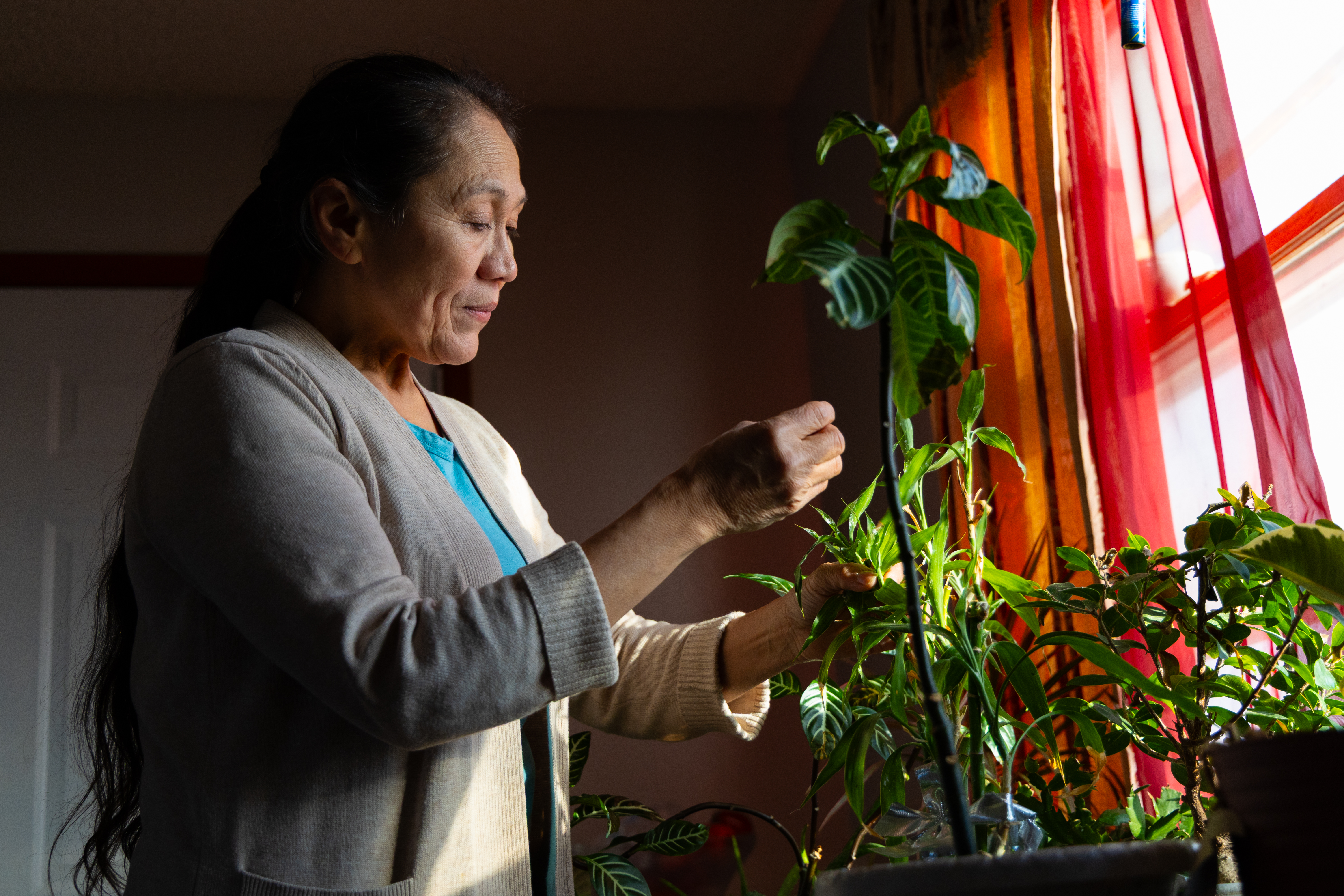
Photo by Naomi Delkamiller/Flatwater Free Press
Blanca Vazquez, as told to Sara Gentzler
“This is where my tranquility is.”
Blanca Vazquez, 58, grew up in a small village in Mexico. When she was about 20 years old, she and her husband moved to Houston, Texas. They moved to Lexington in 1993 for the promise of jobs at IBP. She became a U.S. citizen.
For 25 years, Vazquez worked cutting slabs of brisket at the plant. Her last day was Jan. 16. She owns a home in Lexington, and her six children attended school in town.
Her first language is Spanish, and she spoke with a Flatwater Free Press reporter through an interpreter.
–
When I was young, I used to help my parents by planting cilantro, tomatoes, onions, chilis, cucumbers, corn, watermelon, cantaloupes. Then we used to bring them to other cities nearby and sell them to be able to buy other things that we needed for our home.
It wasn’t a big crop. It was just very, very little, back-of-the-yard farming. But that helped us to survive.
Seeing the struggles my parents had and the sacrifices they made, I always had the idea of supporting them and helping them. And that’s why I decided that, one day, I was going to come to the United States to provide for them.
That dream became a reality. When they were alive, I was able to provide for them.
When I first moved (to Lexington), I was like, ‘This is so little.’ But it made me feel so happy, because I felt like I was home again. It was little, just like my home.
My husband got a job right away (at IBP). It took a while for me to get a job.
I had to grab brisket with a hook, turn it around, then cut it to make it a small piece.
Twenty-five years. Since I started, I did the same job the whole time. I became a master in those briskets.
When I left Mexico, I imagined other things. Not that I was going to have a job that was going to be so difficult on my body.
But every day, I prayed to God, and I always asked for strength to continue to do that job. And not only for me, but for the people who I was surrounded by, because they were great people. And I know that job was hard for all of us.
The big difference is that, when I left Mexico, it was my decision. I made that choice to help my parents. And I left Houston for here, because I knew there was a job opportunity waiting for me, and I still wanted to help my parents. Now it's like the decision was made for me.
My biggest worry right now is finding a new job.
I’m going to start school for English today, because I need to know more English for a job. Everywhere I go, they want you to know English.
I have applied to different positions. I keep applying. But what’s also hard for me is that they’re far away, and when it’s snowy or icy, it’s a little bit more complicated.
It’s devastating, because I used to have something so close to home. If my car didn’t work in the morning, I would just walk.
I need to work, but at the same time, I also feel tired.
I don't like to be without doing something. When I come home from work, the first thing I do is go straight to the garden. I don’t go inside.
My mom, when I was little, planted tall flowers. This area, when it’s in bloom, it makes me think of my old house when I was little. The seeds for the tomato, it’s a special one I bought in Kearney. I wanted a special variety that reminded me of when I was little.
That’s the reason I really like it here. I feel at home, but also like I am living in Mexico because I have that garden.
This is where my tranquility is. This is where I have my calm, my peacefulness. The children who were born in Houston we took here to Lexington, and they continued to grow. That’s why I don’t want to leave this place.
When the closing came, I was so devastated.
But at the same time, I thank God, because I had a job very close to home, I was able to buy a house and I was able to stay in a home with my kids after my divorce. I'm still paying (for) the house. I have to find another way to pay. But for all these years, it gave me that opportunity.
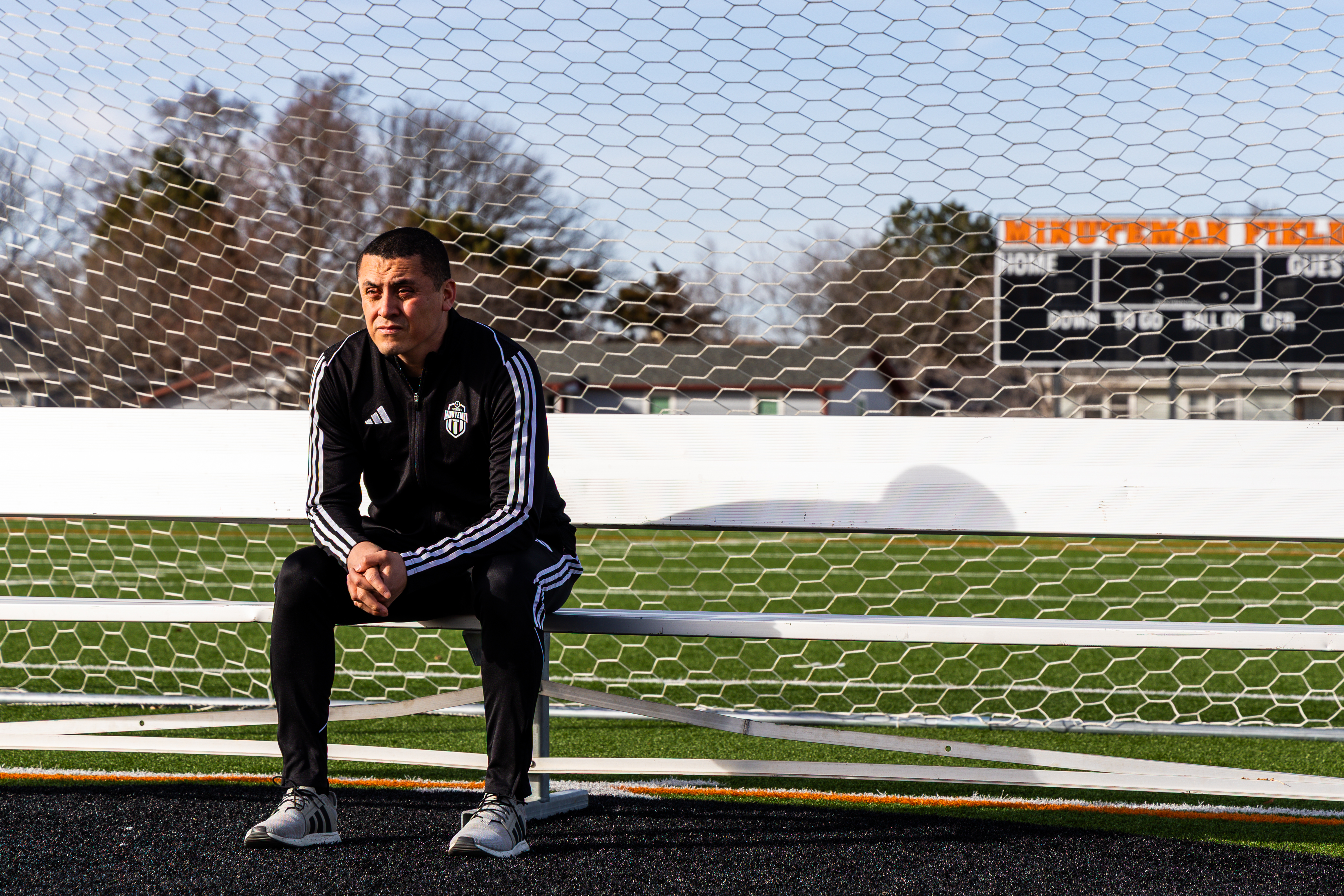
Photo by Naomi Delkamiller/Flatwater Free Press
Joel Lemus, as told to Andrew Wegley
“These are kids, man.”
Joel Lemus, 39, is a counselor and the boys soccer coach at Lexington High School. A native of Mexico, he grew up in Schuyler. He and his family moved to Lexington in 2018.
For years, the boys’ soccer team has come up short of a state title. Lemus has students desperate to play another year. But in the months since Tyson announced its departure, he has watched dozens of students leave after their families found work opportunities elsewhere.
–
When it's their last day, we give them instructions, and say, ‘You'll get a green sheet.’ They have to go class by class, get their teachers’ signatures and record their grade. And it's been hard to see kids, a little bit at a time, walking around with those green sheets.
Kids with the green sheets, sitting with their friends. You see them at lunch. They're talking and they're hugging each other.
There’s a boy that has been here just a little bit over a year. He had come from Cuba. I remember him when he first enrolled, how nervous he was being in a new country, being in a different educational system and the progress that he made over that year and a few months.
He came out of a shell. He was walking the halls like he was a native-born Lex kid, like he’d been there his whole life. To see that progression from him, going from a scared young man into somebody who was very confident. And then on his last day, almost reverting back to his first day — very nervous, very anxious, very scared. The unknown, you know?
We’re gearing up for the season. We have players whose parents were Tyson workers and are trying to make it work where they can. I just talked to a parent last night who was saying, ‘We’re gonna have to move to Kansas, but my kid wants to play soccer for you guys.’
He’s just a freshman, but a very good player. He was born and raised in Lexington. He told me, ‘I’ve always wanted to play here.’ He’s staying with an older sister who’s gonna stay back, because he’s so gung-ho on, ‘We’re gonna win state this year, and I want to be here for it.’
I thought about that, and I hesitate, because these are kids, man.
They already put enough pressure on themselves. Not that pressure is a bad thing. I think that can build character. But these are kids.
I don't want them to feel like, ‘Now I've got the weight of my community,’ right? In Lexington, soccer is the sport. Boys soccer is the sport. And now we've got this weight of our community to win a state championship? At some level, I think that's not fair to do.
Winning a state title isn't going to solve the problems that we have in Lexington.
Kids have told me, ‘For that hour and 30 minutes that I’m on the field, I can stop thinking about things. Just temporarily, I am equal to everybody else on that field.’
‘And if for that hour and 30, I don’t have to think about where we are going to sleep tonight, or what’s for dinner, or what’s going to happen now that Tyson is closed. It doesn’t make things go away, but it helps me.’
Yes, I’m competitive, and I want to win a state title. But to me, it’s bigger for them to have confidence in themselves. Like the boy I had mentioned earlier, how he had blossomed.
Can you do that through being a good soccer team? Sure. But to me, this is bigger than just soccer.
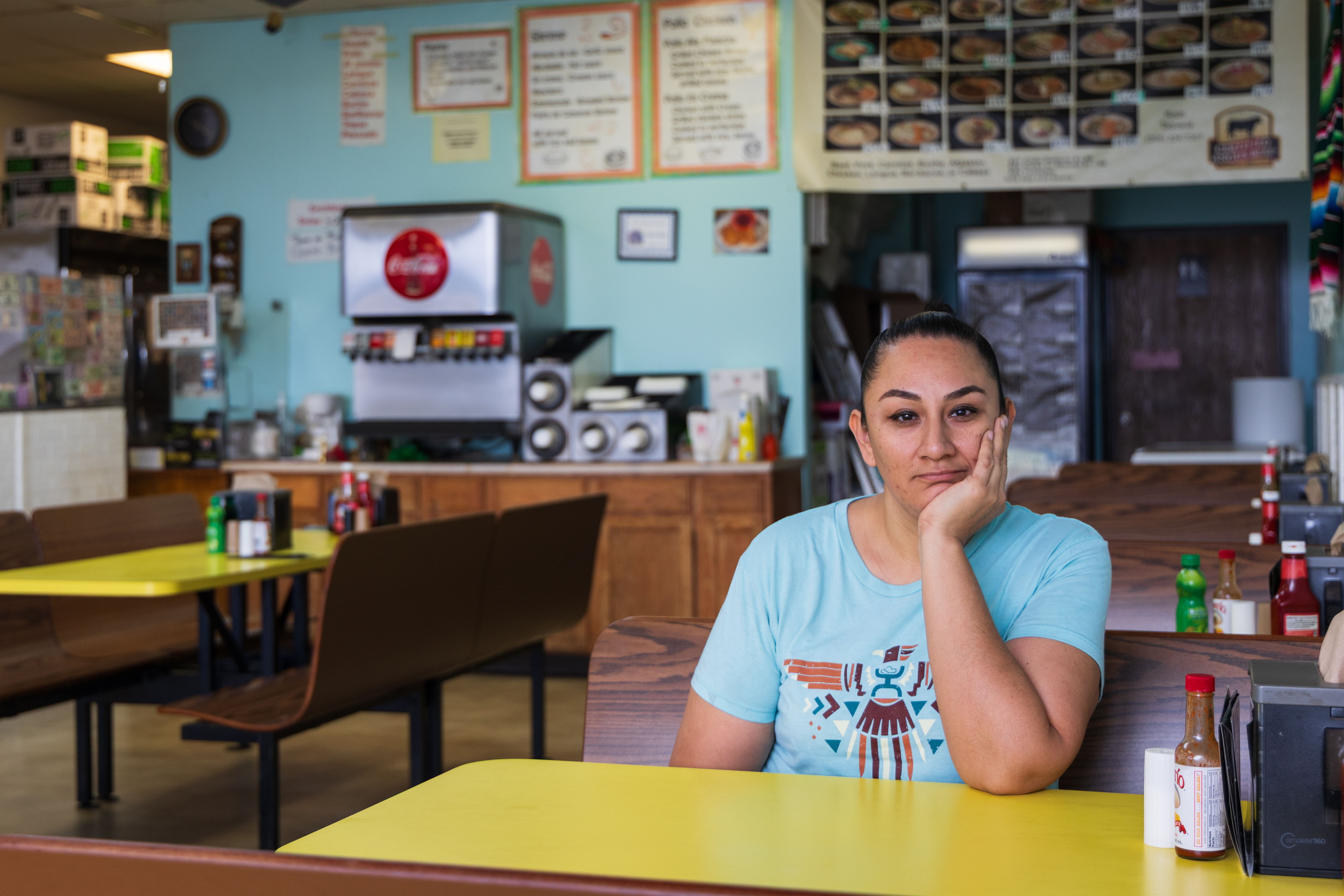
Photo by Naomi Delkamiller/Flatwater Free Press
Edith Avalos, as told to Andrew Wegley
“These days we’ve been so slow I’ve wanted to cry.”
Edith Avalos, 39, moved to Lexington from California in 1991. Her parents worked at IBP for about a decade before opening a taco truck. They then opened Roos Taqueria across the street from the now-shuttered Tyson plant.
Avalos worked at Tyson for 11 years. She took over the family restaurant four years ago.
–
I am afraid. I am.
People that come in here who own other little, small businesses, they’re like, ‘Oh, don't worry about it. You'll be fine.’ No, I worry. What if we have to move? What if I have to close this place down because we're not selling enough? This is what I live off of.
Tyson does affect everything. People make money there. That money goes to the small towns. Here, Overton, Elwood, Broken Bow. That's where the money comes from — Tyson.
When they first announced the closure, I think my sales dropped at least 30% that weekend. It killed my business pretty good. And right now, we are seeing a 50% loss on sales.
Yeah, 50.
At least 25 people have stopped by to say goodbye. There was a (Somali man) here in town. He would come in during his lunch break or before he went into work. He would order a burrito or a torta.
He knew everybody that worked here, not by name, but by face. Everybody knew what he liked. He didn't like the cold drinks from the fridge. So when he would come in, we would have his drink nice and warm for him.
He was one of the first people that moved. He packed his stuff, and he came and he said his goodbye to us right before he left. He's been coming here almost daily for the last five years. It was kind of heartbreaking to see him leave.
The girl that was helping me here in the afternoon, (she and her husband) relocated to Kansas. The other employees don't speak English, and nobody else knows how to run the cash register, so I'm stuck here all day. And to be honest, I don't think I can afford hiring anybody else right now.
I get here at 10 in the morning and I leave at 10 at night. I used to go home at 2 o'clock. I used to be here from 9 or 8 in the morning to 2 o'clock.
I have a kindergartner, a fourth grader, and I have a 17-year-old.
She is the one that helps me run the little kids around. One has dance, the other one has boxing. She's the one that takes them everywhere. They need something, she’s the one who has to go get it.
So it's a little hard. I spend all my time here. But it's OK. I'll be OK.
These days we've been so slow, I’ve wanted to cry. What's going to happen? Not only to this restaurant. Not only to me. What's going to happen to our town?
It’s like a building we had built up, and all of a sudden, a wrecking ball just knocked it down.
Everybody's afraid. We're just sitting in limbo waiting to see what happens.
We’re gonna stay open as much as we can. We're gonna try.
But you know, can you call me back? Somebody else is calling me that wants to make an order.
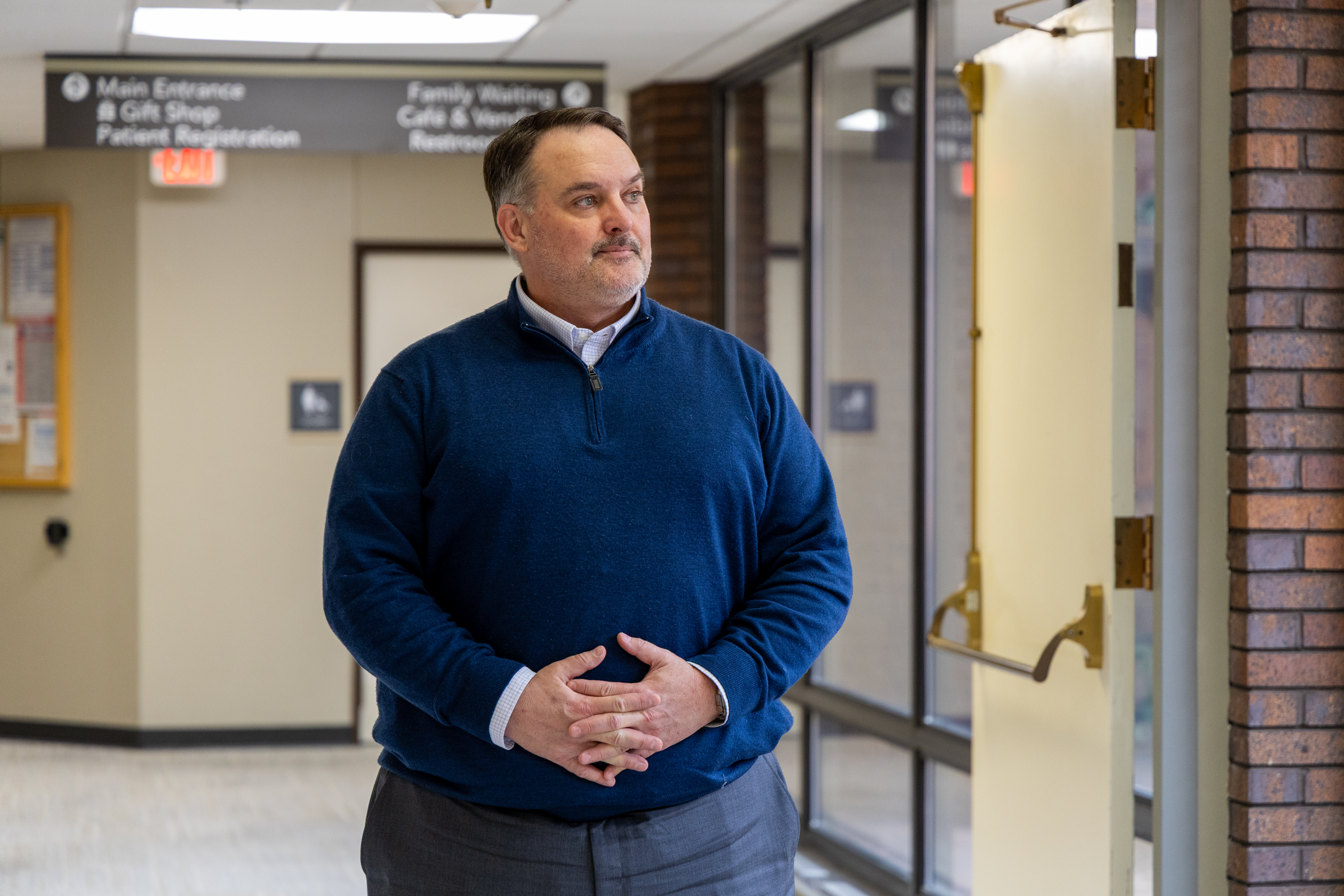
Photo by Naomi Delkamiller/Flatwater Free Press
Jason Douglas, as told to Andrew Wegley
“Somebody’s got to represent these people.”
Jason Douglas has been the CEO of Lexington Regional Health Center since March 2025. In December, Douglas penned an open letter to Tyson executives, accusing them of choosing “shareholder returns and executive compensation over the community that helped make those profits possible for 35 years.”
–
I think I sat on the letter for a month. You look at it every night. It’s something you think carefully over, the wording. But somebody's got to represent these people and what they're going through with a decision like this, and the devastation something like this can create.
That's the thing that saddens me most. Business is business, but there are people behind this.
Pick one of another 50 communities out of Nebraska. This can happen to any one of them. There's got to be some responsibility at a corporate level.
I've always had a passion for great care. I started off in more of a nontraditional path than most administrators in that I have a clinical background. I was a respiratory therapist actually working here in Nebraska. I always just loved the idea of caring for folks, seeing them get better.
I think it highlights the difference between maybe what corporate America looks at for success and what we as a mission-driven organization represent. Granted, I operate a small community hospital, but I think leadership's leadership. I think doing things in the right way makes a difference.
We're going to care for folks at all costs, and that's going to continue to remain our focus. Our decisions are not solely based upon a bottom line. It's, ‘How do we meet a community good? How do we continue to serve in the best way possible?’
We're the population that's left with having to figure out what the path forward looks like for a decision made in a boardroom. We're navigating it day by day, week by week.
We’re trying to monitor things within the community that give us an indication of people moving or staying. It’s home sales. It's looking at the number of “For Sale” signs. That's been the most significant work that we've been doing, and assisting with (health insurance) coverage.
I think that's our primary goal right now: making sure that there is some stopgap coverage so people don't feel reluctant to come in and get care.
I think the toughest part is just seeing families try to navigate how to move forward. And realizing, too, how important it is for us as a hospital to continue to be successful.
In a small community, you're gonna have a lot of overlap with employees or families that might be connected to both Tyson and the hospital. If we are that link for a family to want to remain in the community, we have to work super hard to figure out what the best path forward is to help preserve employment. Us and the school are the one and two (largest employers left) in the community, I would say.
I was amazed when I first came to interview here and I got to visit the school and see 40 flags hanging from the ceilings, and just how proud people were of that. We remain hopeful, you know? That maybe some corporation may see the benefit of that and want to relocate here and try to salvage some of those jobs and maintain some of those families within the community.
This is a community that, over 30 years, has built really a new identity, a new personality. And it’s one that I think a lot of America could learn from.
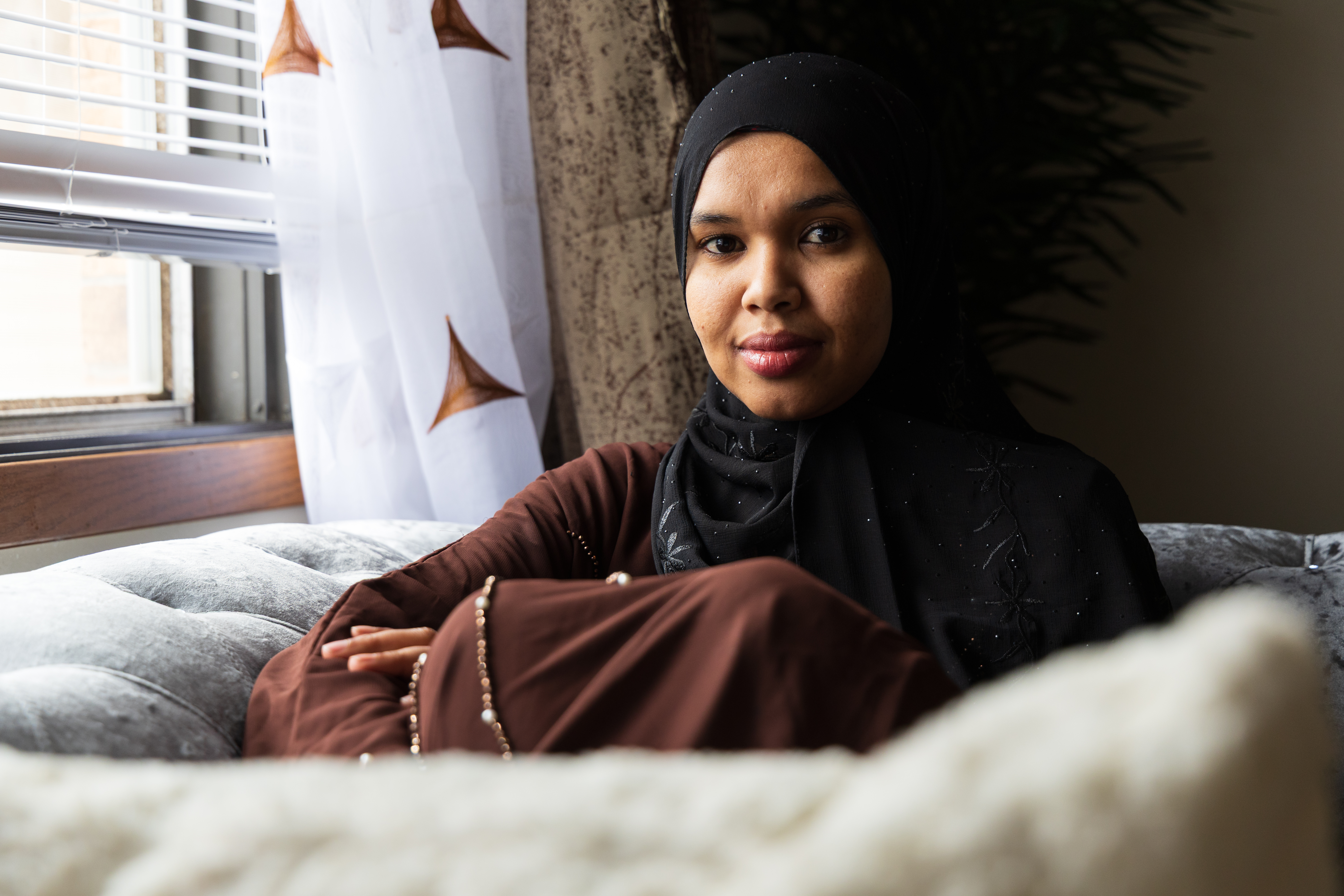
Photo by Naomi Delkamiller/Flatwater Free Press
Hawa Mohamed, as told to Sara Gentzler
“A lot of people are moving … we don’t have a choice.”
Hawa Mohamed, 29, was born in Kenya and moved to Colorado with her family as a teenager. She had friends in Lexington and joined them there, then her family followed.
She and her mother both worked at Tyson. After spending a couple years out of state, Hawa came back and worked at Tyson six more years, trimming meat.
She now lives in an apartment with her two kids and sister. Her mother and two more siblings live in an apartment nearby. Somali is her first language. She talked to a reporter for this story in English, her second language.
Mohamed observes Ramadan, which began last week, ending with a celebration in March.
–
We feel home in Lexington.
I have my family here, I have my kids. Before, I had a job. We had a community here. It’s a small place, and it’s very peaceful in Lexington.
My mom is shocked. Right now, she said, ‘I’m not going anywhere.’ She’s waiting. Everybody is kind of shocked. And sad. It’s really hard.
The thing is, here, all the people around the world know each other. Mexican, white, African, Somali. Everybody knows each other. It’s like family and neighbors.
As a Muslim, you know, we pray five times a day. Even when I was working at Tyson, in the morning and afternoon, they gave us 10 minutes to pray.
A lot of my friends, they moved already. South Sioux City has a Tyson, maybe 60 or 80 people moved over there.
That’s the hard part, for this coming Ramadan: You’re not going to see your friends or the people you’ve been working with.
Ramadan, it’s always special. But it’s not like before.
After Ramadan, we have a kind of holiday. A lot of people come together. People used to come to the mosque and pray together. And people give gifts or money. It’s kind of like Christmas when we finish Ramadan.
Oh my God, last year was fun. It was a lot of people, a lot of kids, a lot of families. I think more than a hundred. Sudan, Somalia, Afghanistan — a lot of people are Muslim here.
A lot of people are moving. So it’s gonna be small. It feels kind of sad, but we don’t have a choice. If the people don’t have a job, they don’t have an option.
I applied to three jobs, but they didn’t call me yet. One in Kearney, two in North Platte.
For sure, I’m going to move. My sister likes Omaha, so we’d maybe move to Omaha.
Omaha, when I go, I feel like I cannot drive — I’m scared to drive, because it’s a big town.
One of my cousins lives in Omaha. So she called us when she heard the company’s closing, and she said we can move there, there’s a lot of jobs. We don’t like it, but we don’t have the option, you know? That’s what it is.
I think (I’ll leave in) May, when my sister graduates.
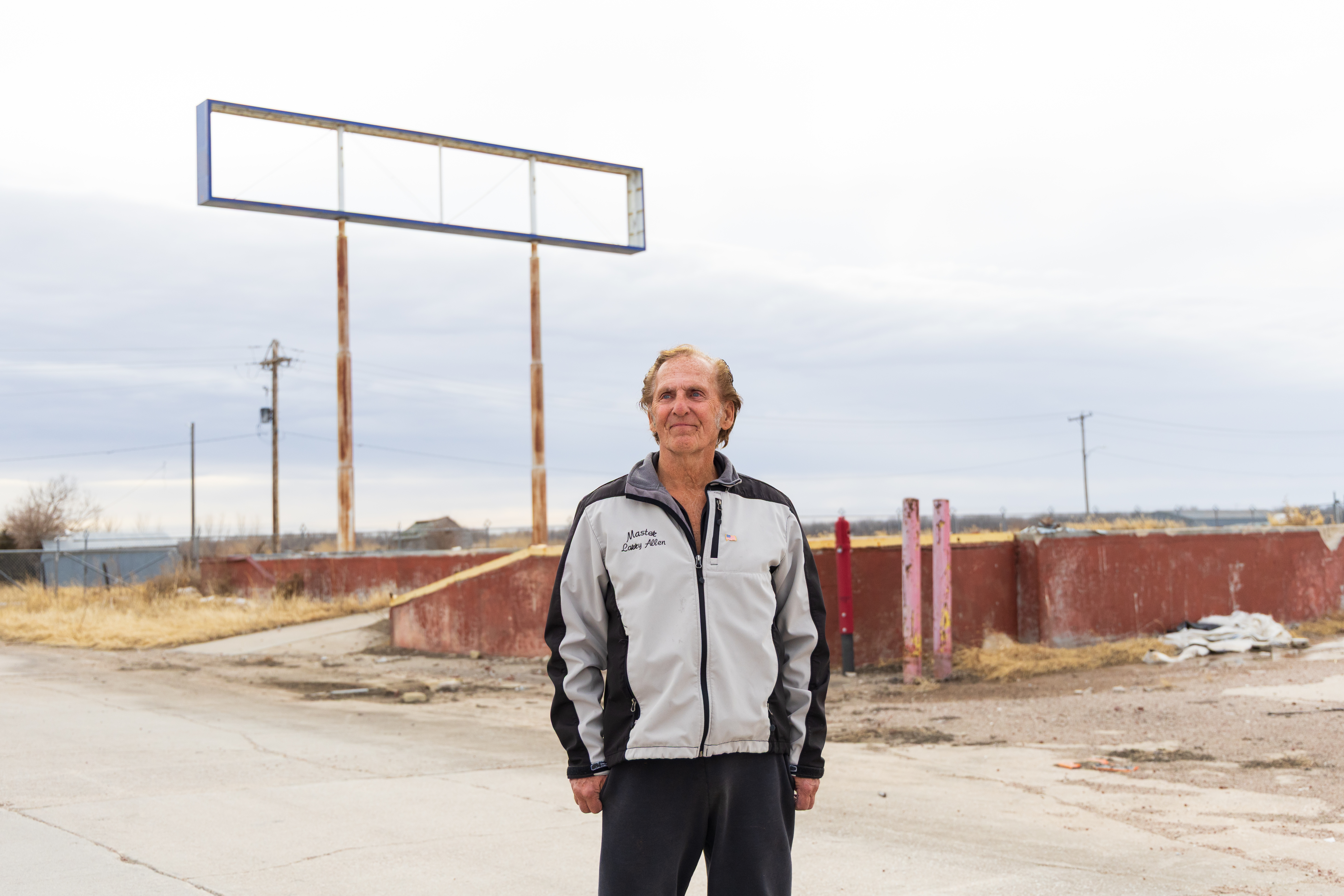
Larry Allen, as told to Sara Gentzler
"A downright disaster in our territory."
Larry Allen, 78, has lived in Cozad his whole life, aside from a stint in the U.S. Navy that had him stationed in Antarctica at 17 years old. He started commuting to Lexington to work at the Sperry-New Holland combine plant when it opened in 1975. The plant shut down in 1985, slicing 900-plus jobs from a community of only 7,000.
Iowa Beef Packers bought the empty plant and started operating in 1990. Lexington boomed, growing by more than 50% through the 1990s and passing 10,000 residents. Tyson acquired IBP in 2001.
Allen went on to work for Tenneco-Monroe in Cozad, until that plant also shut down in 2011 and laid off 500 employees.
Today, he teaches taekwondo in Lexington three days a week.
–
When New Holland opened up, they took a lot of people from all the communities — Cozad, all the way around us. When they told us they were closing down, it was just like walking into a brick wall. I just had no way to go, which way to turn or anything.
They gathered everybody, day shift and night shift, and they put us all in one auditorium and they told us it was happening. And it was a pretty choking day. I thought I had a future there, forever. And when they said they were closing down, it just drained everything out of me, along with everybody else.
It devastated the whole community of Lexington and the surrounding towns. Everybody was so used to making good money. And when that happened, they weren’t bringing in that paycheck. People were building homes and they were getting new cars and boats and everything else, and when they closed down, they had to get rid of their houses and boats.
A lot of people moved, and the rest of us just hung out there and rode the waves. But back then, there were all kinds of factories in this area, and they absorbed just about 100% of us.
When I had my last day, I went out looking for a job and I went from $16 an hour down to looking for a job at $4.50. I checked everywhere, I was hungry for a job.
If I would’ve left earlier, I could have found a job with the state or the county or the city or some of the other factories. But by the time I left, all the jobs were absorbed.
Then IBP bought the place and changed it around. Nobody was sure of what a packinghouse was. They brought in a lot of people. Then Tyson bought it and they just kept producing and building bigger.
Lexington went from 6,500 up to 10,000-plus. It’s a huge growth and a large, large loss.
New Holland was devastating for this area. But not half as much as Tyson is right now. You can’t compare 1,000 people to 3,200. It’s just not comparable.
Tyson is a downright disaster in our territory. The city of Cozad is only 3,400. It’s like taking everybody in Cozad and just saying: Get out.
Most of these people that work at Tyson, that’s the only job they really know. When they closed down, they had companies coming in and saying, ‘We’ll hire you here and here and here.’ Then they gotta move from Lexington to wherever, and some of those factories are clear down in Missouri, Kansas. But they’re not gonna absorb 3,200 people.
I have a rental, and he and his wife both worked at Tyson. They’re not sure what they’re gonna do yet.
I’m going to probably lose eight or nine students. It’ll take half of my class. For some, the fathers are moving and the mothers are staying here, working until school’s out.
In Lexington, they were building houses, they were building apartments. A lot of them just stopped building, because no sense building something like that if no one’s going to live there.
For the next couple of years, it’s going to be a tough ride for Dawson County.
The Flatwater Free Press is Nebraska’s first independent, nonprofit newsroom focused on investigations and feature stories that matter.